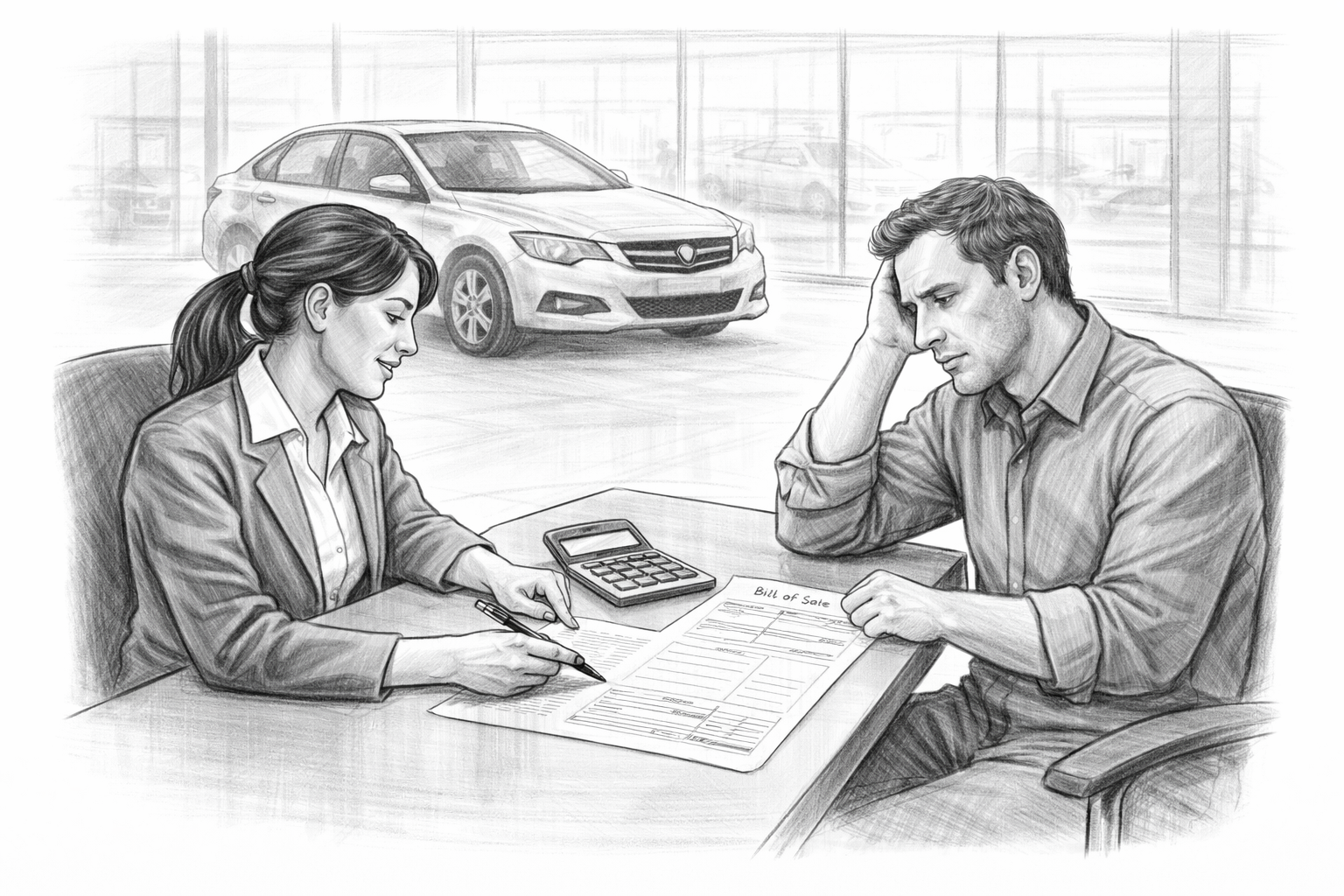
One question that comes to mind for many buyers is whether or not they can trade in their current vehicle if they are still making payments on it.
The short answer? Yes.
A lot of people trade in vehicles they still owe money on.
Realistically, that is something dealerships pay attention to. If you’ve had your car for a few years but aren’t quite done paying it off, you’re usually more open to upgrading because you’re already used to having a loan payment. It’s a different conversation than someone who just paid off their car and now doesn’t have to take on another bill.
Just because it’s common doesn’t mean it always makes sense to do this, however. The real question is pretty simple:
How much do you owe, and what is your car actually worth?
When you trade in a vehicle with a remaining loan, that balance doesn’t just disappear. The dealership pays off your current loan, and everything gets worked into your next deal.
If your car is worth more than what you owe, great! That equity helps you.
If you owe more than the car is worth, that difference gets rolled into your next loan. That’s where people start getting into situations that are harder to manage.
Here is a simple example, because this is usually where it clicks.
Imagine the following:
You still owe $20,000 on your current vehicle.
Your trade-in value comes in at $16,000.
That means you have $4,000 in negative equity.
If you move forward, that $4,000 doesn’t go away; it gets added to your next loan.
Now imagine the next vehicle you’re buying is $30,000. With $4,000 in negative equity, you aren’t just financing $30,000 anymore. You’re financing $34,000 plus taxes and fees.
That’s how payments climb quickly without people fully realizing why.
Where this becomes a bigger issue is when someone just bought their vehicle and tries to trade out of it right away.
Cars depreciate very fast, especially in the first few years. Even if nothing is wrong with the vehicle, the numbers haven’t had enough time to balance out yet.
When I worked in dealerships, this situation came up a few times. Someone would already be looking for something different just a couple months after buying their vehicle. I would ask directly:
“Are you okay with adding what you still owe onto your next loan?”
This wasn’t said to be pushy. It was said because I wanted to ensure they knew what they’d be getting into and to save them time if they weren’t okay with it.
Most of them decided to hold onto their vehicle a little longer.
If you’re thinking about trading in a vehicle you still owe money on, the best thing to do is:
Get your payoff amount from your lender
Get your car appraised
Put those two numbers side by side.
If they are close (or you have equity), you’re in a solid spot.
If you owe quite a bit more than it’s worth, it’s usually a better idea to give it some time, keep making your payments on time, and let that gap close first before shopping around for something else.
At the end of the day, yes: you can trade in a car that isn’t paid off. This is one of those decisions where understanding the structure matters more than anything. Once you see how the numbers work, the right choice usually becomes pretty obvious.
Leave a Reply